
Arrest History in Oscoda County
The Oscoda County Sheriff is the primary local patrol and booking agency. Michigan State Police troopers also investigate and arrest, while Michigan Department of Natural Resources conservation officers handle offenses tied to forests, waterways, hunting, fishing, and ORV activity. Oscoda County has no incorporated cities or villages, so there is no city police blotter or municipal jail to search. Townships and communities such as Mio, Fairview, and Luzerne use county and state law enforcement channels.
An arrest can produce several connected records. The arresting officer creates an incident or arrest report with the alleged facts and probable cause. A custodial arrest adds a sheriff booking record, fingerprints, a photograph, the charge stated at intake, and bond or release information. The 81st District Court later creates the complaint, arraignment, and bond file if charges are authorized. Reportable fingerprints and arrest data can also reach the Michigan State Police Criminal Justice Information Center. None of these documents, by itself, establishes a conviction.
The official Oscoda County Sheriff page identifies the local office and its state lookup links.
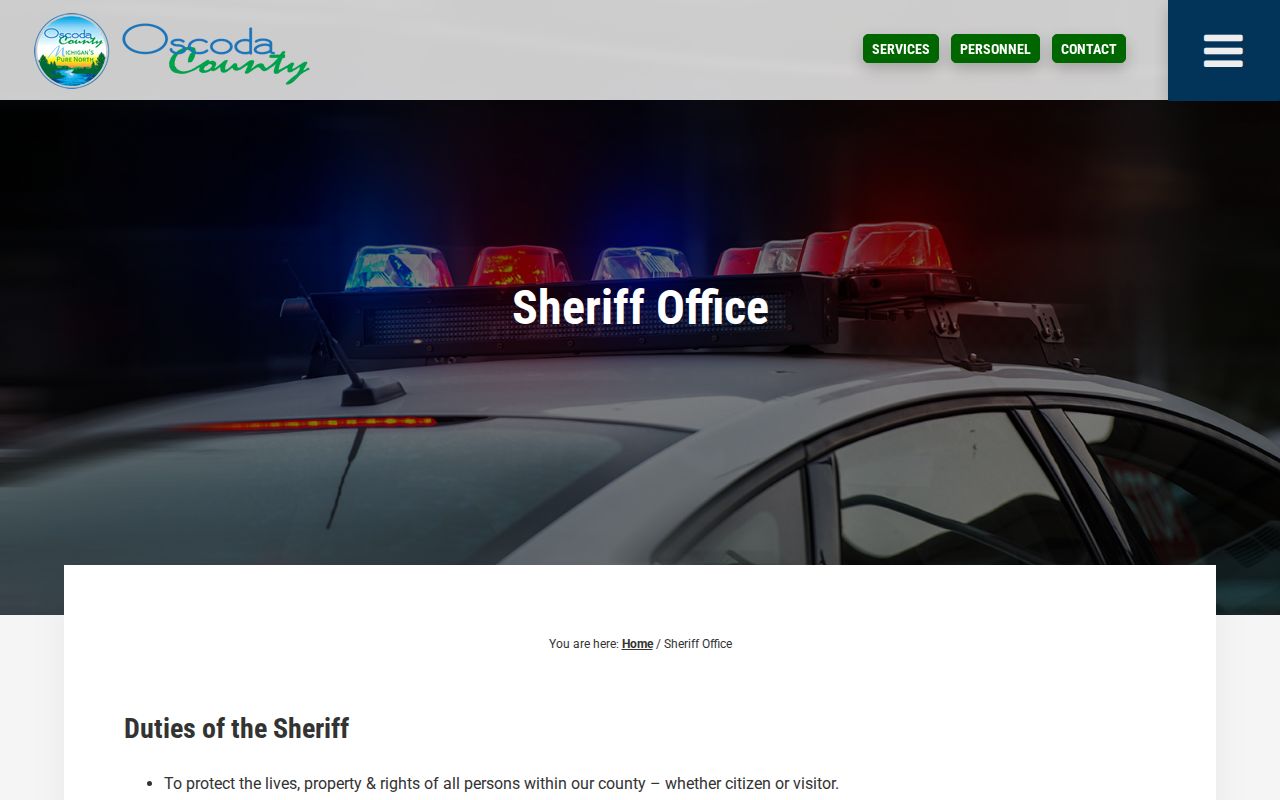
That page is a useful starting point because it directs readers to the sheriff and to separate Michigan custody and criminal-record systems.
Oscoda County Arrest Report Requests
The sheriff's official CivicPlus NextRequest portal is the strongest online route for an Oscoda County arrest report or booking record. Search the previously released requests and responsive documents first. If the needed material is not there, open a new request and describe it narrowly. Include an agency report number when known, the event or arrest date, time, location, the subject's accurate name, and the exact records sought. Useful labels include arrest report, incident report, booking sheet, custody confirmation, bond record, dispatch or CAD record, 911 audio, or releasable warrant information.
The official sheriff records-request landing page shows both the request route and the public release library.
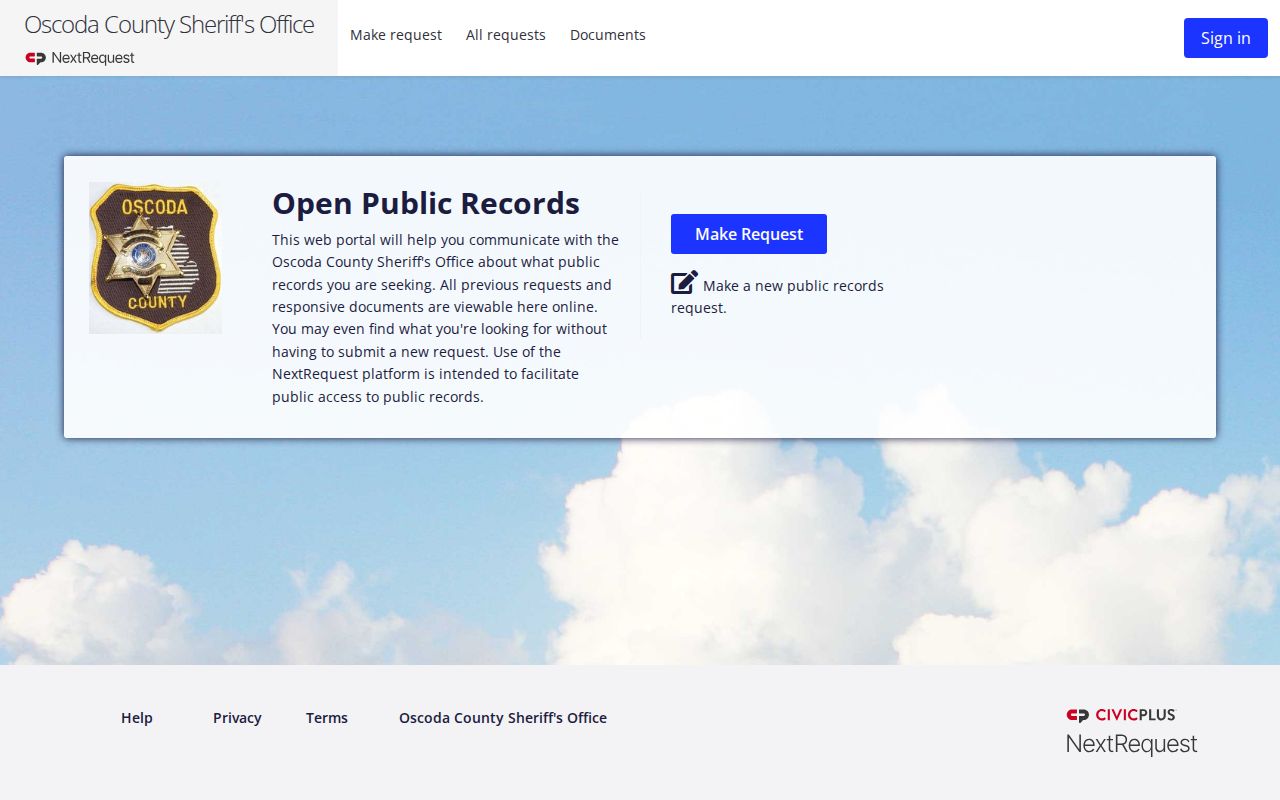
The separate search and submission choices help a requester avoid filing a duplicate request for an Oscoda County arrest record that has already been released.
The printable sheriff FOIA form also supports requests for copies or inspection by mail or delivery. It provides a fee-ceiling field and says responses primarily arrive by email when one is supplied. Lawful labor, copying, and mailing fees may apply under county policy and Michigan FOIA. Because a January 2026 water-line break caused Government Center damage and reconstruction was underway in May, check current county notices or call before visiting.
Oscoda County Sheriff's Office
301 S. Morenci Avenue
Mio, MI 48647
989-826-3214
sheriff@oscodacountymi.com
How to Look Up Oscoda County Arrests
No single public screen provides the full Oscoda County arrest trail. Work from the newest custody source toward the later court and repository records. Accurate spelling and date of birth help distinguish people with similar names, while an event date, place, report number, or court case number can connect one record to the next.
- Call the sheriff for recent custody. Phone 989-826-3214 and ask whether the person is currently held, using an accurate name and date of birth. Ask for the booking number, intake date, charges held, bond, court, and release status, subject to disclosure limits.
- Request the creating agency's record. Use Sheriff NextRequest for sheriff-created arrest and booking files. For an MSP arrest, follow the MSP public-records guidance. For a conservation arrest, use DNR's official FOIA channel.
- Trace filed charges in court. Search MiCOURT Case Search for an 81st District Court case. Use Court NextRequest or call Central Filing when the online docket is absent, filtered, older, or lacks the needed document.
- Check the state repository later. Order the $10 public name-based product through ICHAT using first name, last name, sex, and date of birth. It covers qualifying reportable Michigan events, not every arrest.
- Use the formal local fallback. Submit the sheriff's written FOIA form by portal, mail, or delivery, or visit the counter. Michigan FOIA generally calls for a response within five business days, though that deadline is not a promise of production in five days. Use VINELink, which the sheriff links, for available custody-event notifications after direct confirmation.
For a filed charge or its result, the court file controls. The broader Oscoda County criminal court case record may include the complaint, register of actions, bond order, dismissal, or judgment that a booking record cannot supply.
Who Holds Oscoda County Arrest Records
The agency that made the arrest usually owns the narrative report. The Oscoda County Sheriff holds sheriff incident and arrest reports and also manages local jail-booking information. MSP retains records from state-police investigations. DNR keeps conservation-officer reports. Federal agency records follow that agency's FOIA process, while a later federal criminal case belongs in PACER rather than a county system.
This split matters in rural Oscoda County. Official DNR conservation-officer reports may describe enforcement near the AuSable River or on hunting, fishing, and ORV matters, sometimes noting lodging at the county jail. Those biweekly narratives are not a full arrest log. A DNR report and a county custody record can therefore concern the same arrest but answer different questions. Ask the sheriff about custody and request the incident narrative from DNR.
“Police report” can also be too vague. Specify 911 audio, dispatch records, photographs, body-camera footage, or other identifiable material if those items are needed. The written narrative may be only one part of the agency file. Crash reports follow a different route and should not be mistaken for arrest records.
What an Arrest Record Shows
An Oscoda County arrest file can combine details from the incident report and the booking entry. Public copies may be redacted. Victim identifiers, juvenile information, medical details, Social Security numbers, LEIN-only data, and information protected by an active-investigation exemption may be withheld. Requesters should identify the fields they need instead of assuming every part of the file will be released.
| Booking Number | The jail's intake identifier, useful for matching a custody event to related records. |
|---|---|
| Booking Date & Time | When local custody intake occurred, which can differ from the incident or court-filing time. |
| Arresting Agency | The sheriff, MSP, DNR, or another agency responsible for the arrest report. |
| Charges | The allegations recorded at arrest or booking, which may change after prosecutor review. |
| Bond | The bond amount, type, hold, or court information available at that stage. |
| Mugshot Policy | The sheriff publishes no booking-photo feed. A releasable booking photograph must be requested and remains subject to FOIA exemptions and redaction law. |
| Release Status | Whether custody continued or ended and any available release date or transfer information. |
The initial charge is not fixed. A prosecutor may authorize a different count, decline a charge, or file nothing. The court docket is the better place to read what was actually filed and how each count ended.
Tracing an Oscoda County Booking
A custodial arrest usually moves through transport, identity and intake checks, property inventory, health and safety screening, fingerprints and photograph, entry of charges, warrant or hold checks, classification, and a judicial bond or arraignment event. Public Oscoda County sources do not expose sensitive jail classifications such as medical, suicide-watch, pod, or cell data. Their absence from a public record does not show that screening did not occur.
Reportable fingerprints and arrest information move to MSP's Criminal Justice Information Center. If the prosecutor authorizes a case, the 81st District Court holds the complaint, arraignment, bond events, and preliminary examination. A felony bound over for trial then moves to the 23rd Circuit Court, creating a second judicial record. Court clerks later return disposition information to the repository. Timing gaps are normal, so a fresh booking may be known to the sheriff before MiCOURT or ICHAT shows anything.
The official Sheriff NextRequest submission screen illustrates the online path for a targeted Oscoda County arrest-record request.
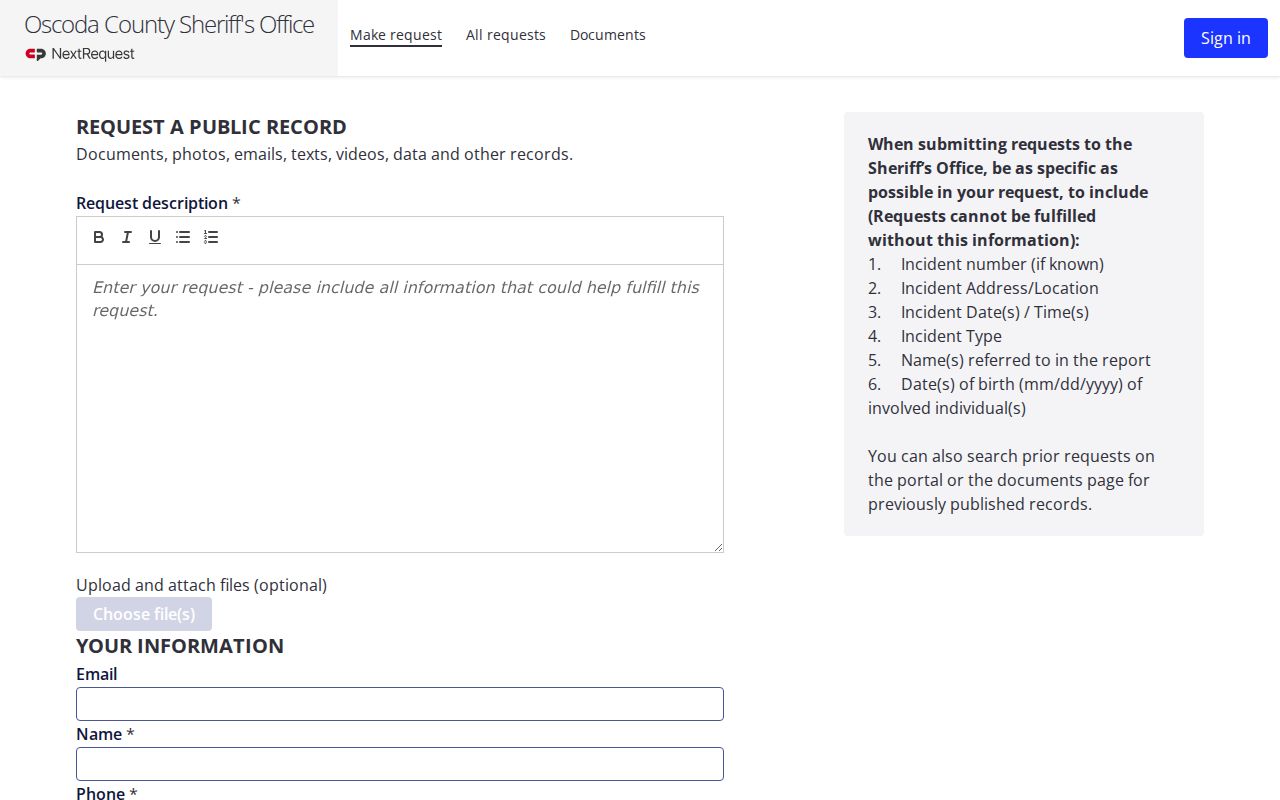
A precise request helps the sheriff locate the booking or report while applying any required redactions to the responsive record.
Recent Arrests and Booking Logs
Oscoda County does not publish a verified daily arrest blotter, current inmate roster, booking-photo feed, or official sheriff app. For recent custody, call 989-826-3214. A requester can also visit or write the sheriff at 301 S. Morenci Avenue in Mio and can file through Sheriff NextRequest. Phone disclosure may be limited, so a formal request is the better path when a copy of the arrest report or booking entry is needed.
MiCOURT can reveal a newly filed District Court matter, but filing lag means it is not a live jail list. VINELink may provide notification of custody events when enrollment is available, yet the sheriff should first confirm that it fits the case. OTIS is for MDOC prisoners, parolees, and probationers within its public scope. It does not replace a county-jail check and will omit jail-only matters.
Absence from any one source proves little. A person may have been released before a query, the court case may not yet be filed, or an arrest may fall outside ICHAT's public scope. Use dates and identifiers to compare sources rather than treating a blank search as a definitive history.
Oscoda County Arrests and ICHAT
ICHAT is Michigan's public name-based repository product. It can show reportable Michigan felony arrests and convictions and serious-misdemeanor convictions. It suppresses nonpublic records and warrants, and it excludes federal, tribal, juvenile, traffic, most local-misdemeanor, out-of-state, and other material beyond its defined scope. That makes ICHAT broader than Oscoda County but narrower than “everything ever alleged.”
A newly booked Oscoda County arrest may not yet appear because fingerprints must be transmitted and matched, charges may still be under prosecutor review, and the court has not yet reported a disposition. Use the subject's exact first and last name, sex, and date of birth. For review of one's own fuller Michigan record, MSP describes a mailed fingerprint-card process using an RI-008 or FBI FD-258 card and a $30 state fee. Call the sheriff before relying on local fingerprint availability, price, or appointment assumptions.
Errors should be corrected at their source. MSP directs court-information errors to the listed court, while its RI-026 Challenge Request can address a repository issue. Supporting dismissal or disposition documents help show what should change.
Arrests vs Convictions
An arrest record describes an accusation and custody event. A conviction record reflects a court's finding of guilt or an accepted plea. Oscoda County sheriff and jail files can continue to retain a booking entry even when no charge is filed or a case ends in dismissal. The court register of actions and judgment show the judicial outcome, while ICHAT compiles only the public repository information within MSP's scope.
| Arrest Record | Conviction Record |
|---|---|
| Created by the arresting agency and jail. | Created by the District or Circuit Court. |
| Shows that an arrest or booking occurred. | Shows a plea or finding of guilt and its disposition. |
| Lives with the sheriff, jail, MSP, DNR, or other creating agency. | Lives in the court file and may be reported to MSP. |
| May be followed by release, no filing, dismissal, or acquittal. | May lead to sentence, appeal, or lawful set-aside relief. |
Note: An Oscoda County arrest is not proof of guilt, and only the court file can establish how a filed charge ended.
Oscoda County Arrest Record Relief
Michigan uses “setting aside” as the statutory term, while Clean Slate and expungement are common public terms. Relief does not mean that every source updates at once. First identify the Oscoda County court case tied to the arrest, obtain the register of actions and judgment, and determine whether the record qualifies under Michigan law. Application-based relief is filed in the convicting court and can require fingerprints and service on MSP, the Attorney General, and the prosecutor.
After an order or automatic set-aside, check both the court record and ICHAT. A stale judicial segment should be raised with the court, and an MSP repository problem may require the agency's challenge process. Booking photographs and arrest files remain agency records, but public access depends on Michigan FOIA exemptions, court rules, retention law, and set-aside restrictions. Clean Slate is not a reason to assume an old arrest has disappeared everywhere.
The sheriff also links a separate crash-report vendor for traffic collisions. The officially linked BuyCrash search is relevant only when the requested police record concerns a crash.
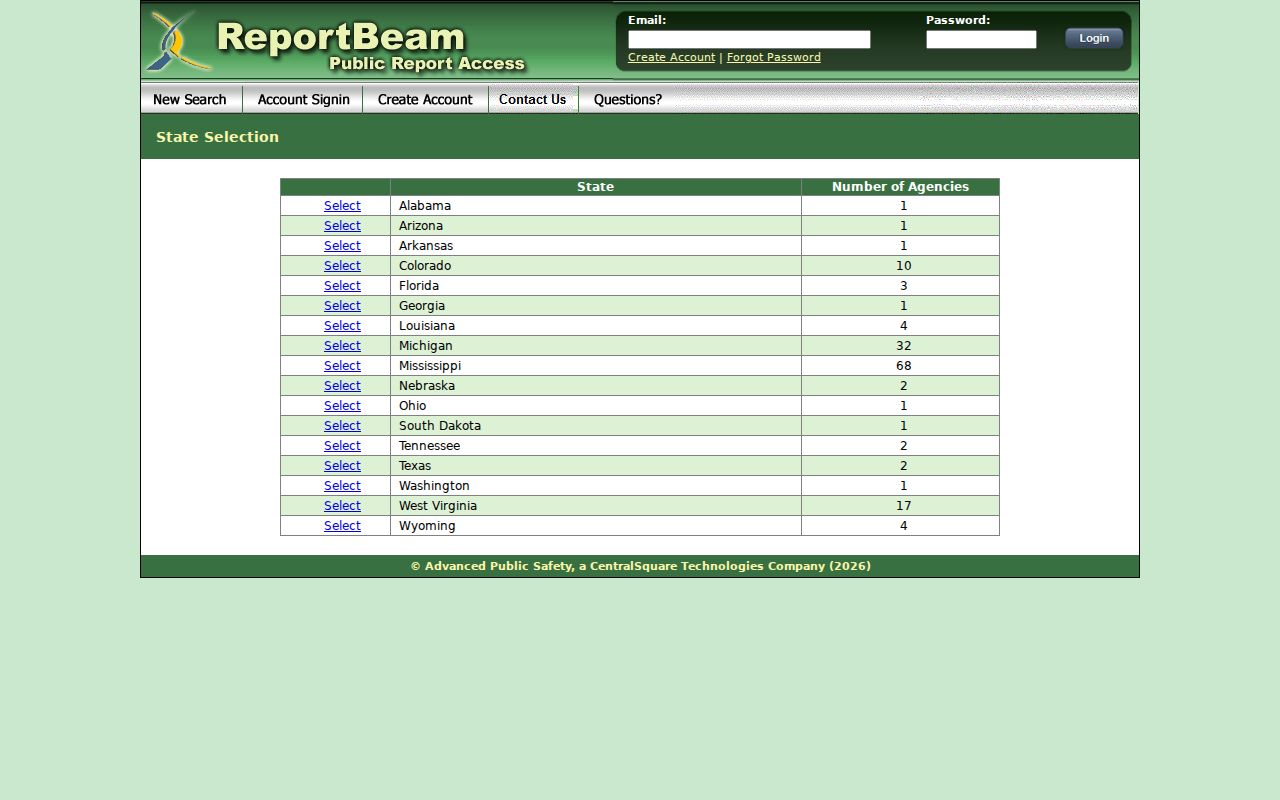
This distinct route illustrates why a requester should name the exact record type rather than ask broadly for every “police record.”