
How to Check Criminal History in Oscoda County
Begin with the source that created the record. MiCOURT Case Search is the first online stop for filed District and Circuit Court cases. A search can use a participant name or a case number. If a docket is missing, filtered, old, or short on documents, contact the Oscoda Central Filing Office or use the court's public-record portal. For a fresh custody event, call the sheriff because Oscoda County does not publish a verified online jail roster.
Prepare a full legal name, date of birth when an official form requests it, possible prior names, an event date, and a case or report number if known. Those details separate people with similar names and help staff identify a specific public record. Work through the channels in this order:
- Search MiCOURT for District and Circuit Court cases tied to the name or known case number.
- Call the sheriff about current custody, then request the sheriff-created arrest or incident record through NextRequest.
- Order the statewide ICHAT result with the subject's name, sex, and date of birth.
- Check OTIS only when MDOC prison, parole, or felony probation status is relevant.
- Ask Central Filing for the complaint, register of actions, judgment, or certified copy needed to confirm an outcome.
If Michigan State Police or a DNR conservation officer created the incident record, request that agency's report through its own public-records channel rather than asking the sheriff to reproduce it. The county jail can still answer local custody questions. One clear result never proves that every other system is empty. Reporting lag, spelling, court filters, restricted records, and the narrow scope of each database can change what appears.
Five Oscoda County Record Doors
Each public channel answers a different question. The sheriff explains what deputies reported and what the jail recorded. The courts show what prosecutors filed and how a judge resolved each charge. ICHAT compiles qualifying Michigan repository events. OTIS tracks a much smaller group under Michigan Department of Corrections custody or supervision. The Michigan Public Sex Offender Registry displays the public part of a separate registration system.
| Official channel | Best use | Main limit |
|---|---|---|
| Oscoda Sheriff | Incident, arrest, booking, jail, and warrant questions | No verified public roster |
| MiCOURT and Central Filing | Charges, hearings, disposition, and sentence | Some records are filtered or protected |
| ICHAT | Public statewide Michigan history | Many record types and warrants are excluded |
| OTIS | MDOC custody or supervision | Not a full criminal history |
| PSOR | Public registry searches and alerts | Not the full law-enforcement SOR |
Searching more than one door is not duplication. It is how an Oscoda County record is followed from an event to custody, court, repository, and supervision.
Official Michigan Background Checks
The Michigan State Police Criminal Justice Information Center runs the Internet Criminal History Access Tool, known as ICHAT. Any member of the public may order its name-based product for $10. The required identity fields are first name, last name, sex, and date of birth. It reports qualifying Michigan felony arrests and convictions and serious-misdemeanor convictions, but it leaves out warrants, suppressed records, federal and tribal matters, juvenile cases, traffic cases, most local misdemeanors, out-of-state matters, and other material outside its rules.
A fingerprint search is more closely tied to identity, yet Michigan does not offer one universal public vendor for every purpose. MSP permits fingerprint checks when a state or federal law, executive order, or rule authorizes them. Someone reviewing their own Michigan record may have prints placed on an RI-008 or FBI FD-258 card and mail the packet with the published $30 MSP fee. Call the Oscoda County Sheriff at 989-826-3214 first to confirm local print service, price, and appointment needs.
| Product | Base fee | Core input |
|---|---|---|
| ICHAT public search | $10 | Name, sex, and date of birth |
| MSP personal fingerprint review | $30 plus local printing | Fingerprint card and request data |
| FBI Identity History Summary | $18 plus printing | Fingerprints and subject request |
| MiCOURT search | Free | Name or case number |
ICHAT Limits in Oscoda County
The MSP criminal-history overview compares public name checks with fingerprint routes and explains the limits of the statewide file.
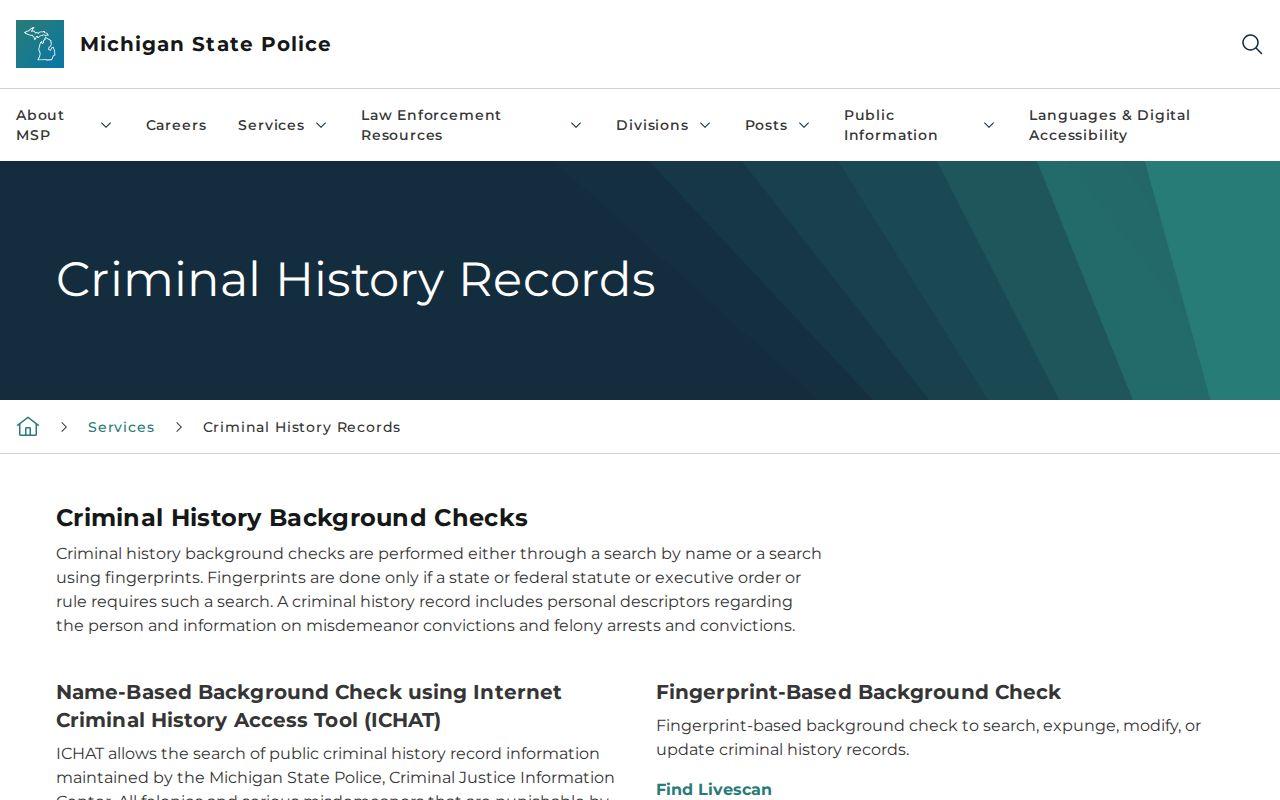
The comparison matters in Oscoda County because an ICHAT result is not a copy of the sheriff report or the court file. It also cannot confirm an active warrant. A missing disposition may need correction through the court that sent the judicial segment to MSP. The RI-026 Challenge Request is available through the MSP forms directory, and supporting court orders should accompany a correction request.
For a self-review, compare the repository result with the register of actions and judgment from the convicting court. If the arrest segment is wrong, follow MSP's challenge directions. If the court outcome is wrong or absent, start with Central Filing. This split keeps each custodian responsible for the part it created.
Types of Criminal Records
Oscoda County criminal records are built in stages. An incident report records an agency's account of an event and may exist without an arrest. An arrest report covers probable cause and custody, but it is not proof of guilt. The jail then creates booking data. Once a prosecutor files a charge, the 81st District Court opens the misdemeanor case or the first stage of a felony. A bound-over felony continues in the 23rd Circuit Court under a separate jurisdiction and may have a second case number.
- Agency records: incident narratives, arrest reports, dispatch material, evidence references, and officer actions.
- Jail records: booking time, intake identity, booking charge, bond, holds, and release status.
- Court files: complaint, hearings, bond orders, motions, pleas, verdict, disposition, and sentence.
- Repository entries: qualifying Michigan arrest and disposition cycles reported to MSP.
- Supervision and registry records: public OTIS status and public PSOR information within each system's scope.
Warrants, probation files, juvenile matters, sealed cases, and nonpublic registry data have their own access rules. A search should identify the record type before it asks an office for "everything."
No Oscoda County Jail Roster
No official public inmate roster or booking log was verified for the Oscoda County jail. The correct fallback is direct: call the Sheriff's Office at 989-826-3214, visit 301 S. Morenci Avenue in Mio, or submit a focused request through Sheriff NextRequest. Ask for current custody, booking number, booking time, charges held, bond, issuing court, and release status. Staff may limit what can be disclosed by phone.
For a person serving a state prison term or under public MDOC supervision, use the Offender Tracking Information System.
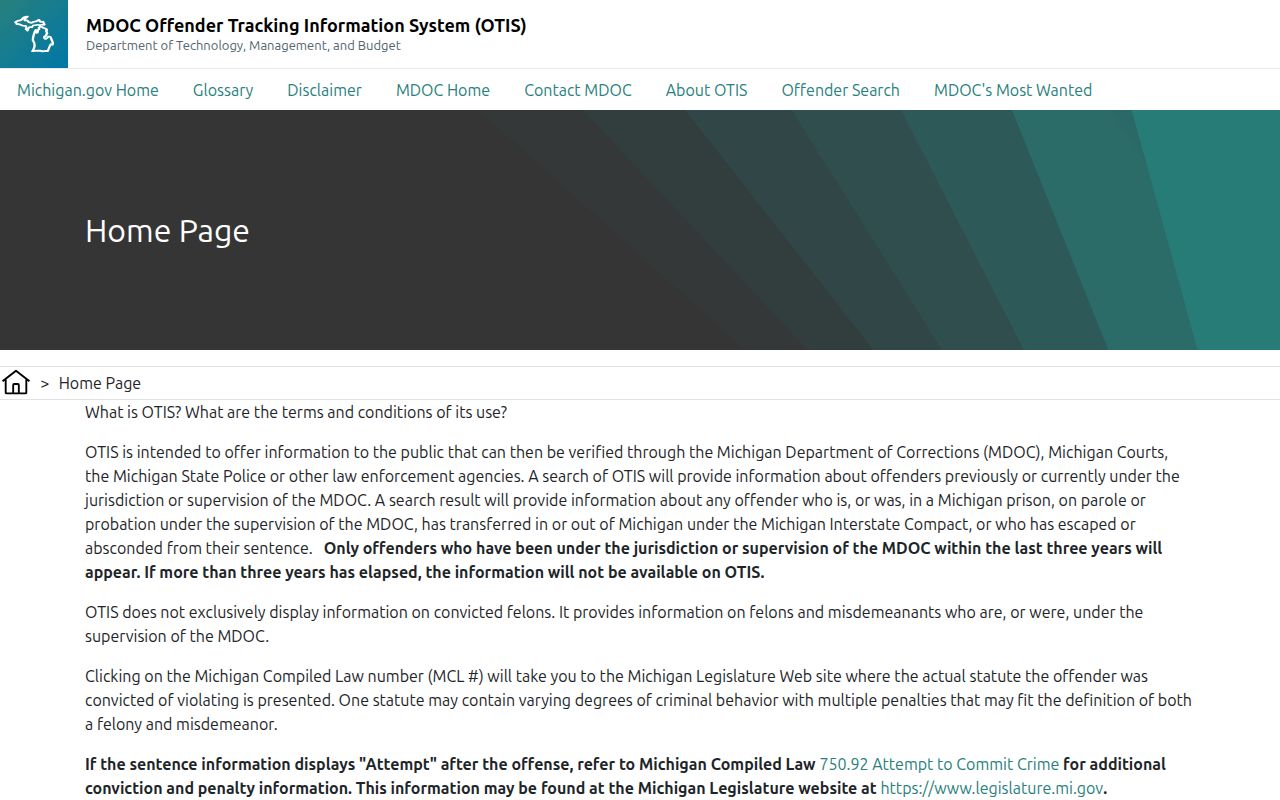
OTIS accepts a last name or MDOC number and offers filters for first name, sex, age, race, status, and scars, marks, or tattoos. It can show custody or supervision details, sentence offenses, dates, and an assigned office. It does not cover jail-only cases, other states, or people never placed under MDOC.
The MDOC FAQ explains that OTIS is not a complete background check and generally retains public data for three years after discharge.
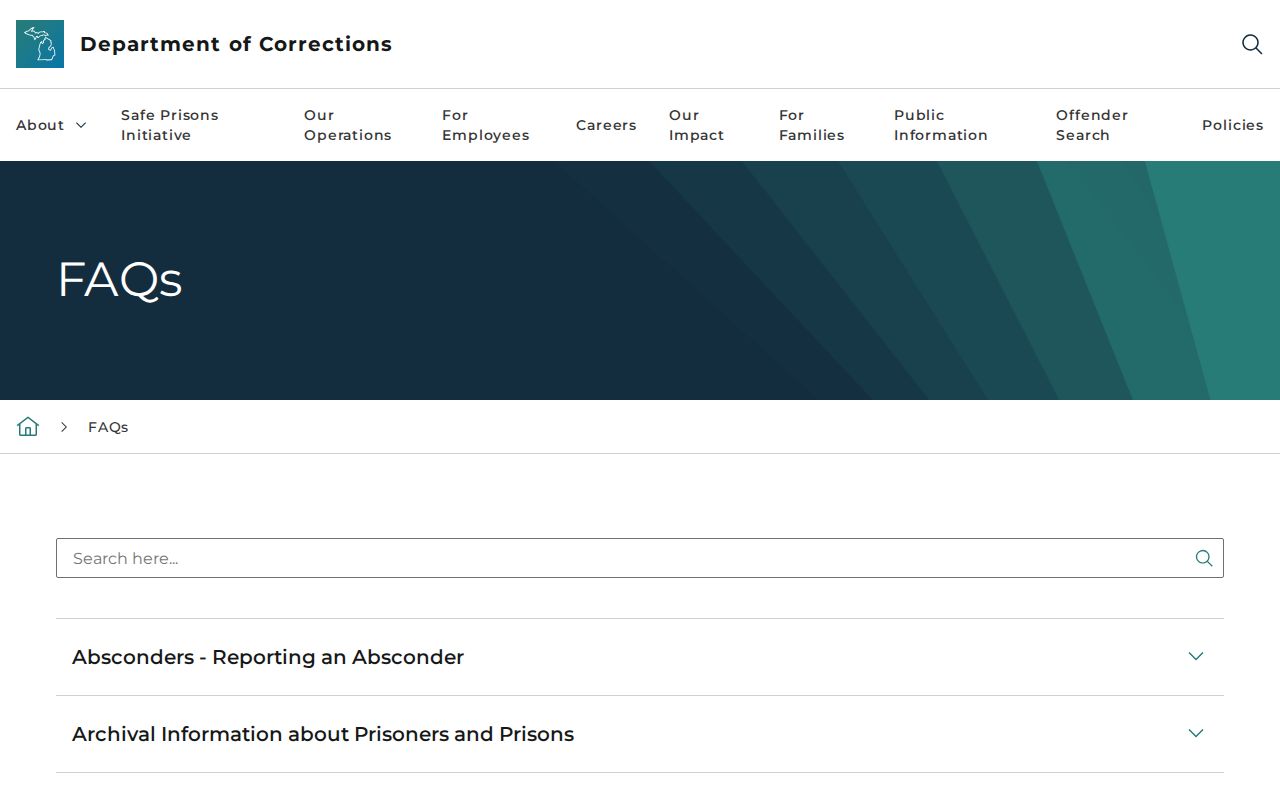
That time limit is another reason to consult the sentencing court. VINELink, which the sheriff links, can support custody-status notifications, but direct confirmation should come first.
What an Oscoda County Criminal Record Shows
The fields depend on the source. A Michigan rap sheet organizes identity data around arrest and disposition cycles. A court docket instead centers on the case number, parties, charges, events, judge, bond, outcome, and sentence. A booking record centers on custody. Read the label on the product before drawing a conclusion from a missing field.
| Name and identifiers | Current name, aliases, date of birth, and agency or state identifiers when publicly available. |
|---|---|
| Arrest and booking | Arresting agency, dates, tracking or booking number, initial charges, bond, holds, and release. |
| Charges and statutes | Officer allegations, prosecutor-authorized counts, MCL citations, and charge level. |
| Disposition | Dismissal, acquittal, plea, verdict, conviction, or another charge-level outcome. |
| Sentence | Jail or prison term, probation, fines, costs, restitution, and related orders as public. |
| Custody or supervision | Jail status, MDOC location, parole, or felony probation when that system publishes it. |
- Register of actions
- The dated list of events entered in the court case.
- Disposition
- The outcome of a charge or case, not merely a closed status.
- Bindover
- The transfer of a felony from District Court to Circuit Court after probable cause or waiver.
- Set aside
- Michigan relief that removes a qualifying conviction from ordinary public access.
Match the field to its date and source. An initial booking charge can differ from the prosecutor's filed count, and neither should replace the court's final disposition.
Three Oscoda County Request Portals
Oscoda County separates sheriff, court, and general county requests. That is useful, but it also means a request sent to the wrong portal can slow the search. Sheriff reports belong in Sheriff NextRequest. Complaints, judgments, registers of actions, and other court documents belong in Court NextRequest or with Central Filing. Administrative county material belongs in the general county portal.
The general county NextRequest page illustrates the separate request route.
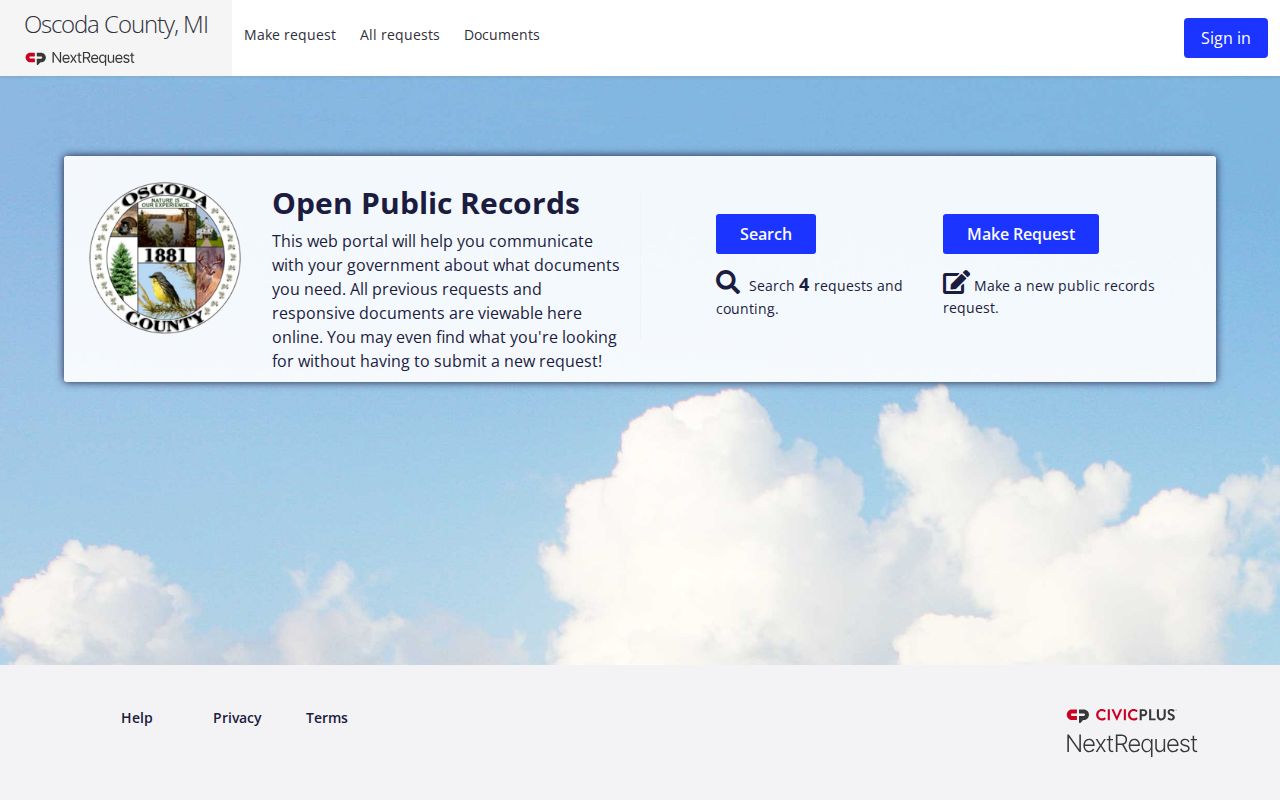
Before filing, search the release library. A request should then name the event date and place, involved agency, report or case number, people named in the record, and the exact item wanted. Ask for 911 audio, CAD records, photographs, or body-camera video separately because a request for a "police report" may yield only the written narrative.
Submission is free, but lawful labor, copy, and mailing charges can follow under county policy and Michigan FOIA. The written form allows a requester to set a fee ceiling. A response is generally due within five business days, though that deadline does not promise that a large production will be complete by then.
Public Access Laws
Michigan law treats access by record and custodian. FOIA governs many executive-branch and county agency records, while court access follows Michigan Court Rule 8.119. Separate criminal-history and registry statutes determine what ICHAT and PSOR may display. An office may redact protected identifiers, victim-sensitive facts, juvenile information, active-investigation material, or security data when law permits.
Key Michigan rules:
MCL 15.231 states Michigan's policy favoring public access to government information.
MCL 15.235 sets the ordinary five-business-day response framework.
MCL 28.243 governs criminal-history reporting and dissemination.
MCL 780.621 governs applications to set aside qualifying convictions.
FOIA does not force a public body to write a new explanation or release a record that another law protects. A partial denial should state its basis and preserve nonexempt material where separation is possible.
Oscoda County Warrant Verification
Oscoda County has no verified public active-warrant database or most-wanted list. ICHAT does not show warrants, and LEIN is not a public search system. For a concern about one's own warrant, call the sheriff at 989-826-3214, search MiCOURT for a related public case entry, and call the 81st District Court or 23rd Circuit Court. Court or Sheriff NextRequest may supply a releasable record, but sealed or unexecuted process can remain restricted.
Ask the issuing court to confirm the case number, warrant type, charge, bond or conditions, and appearance or surrender instructions. A bench warrant often comes from failure to appear or comply in a pending case. An arrest warrant, probation-violation warrant, and search warrant serve different roles. Do not rely on a stale third-party name list.
Note: A public docket event may point to a warrant, but only the issuing court or law-enforcement agency can confirm current status.
Sealed, Expunged & Restricted
Juvenile, sealed, nonpublic, victim-identifying, and protected personal information does not appear in ordinary public results. MiCOURT excludes several protected case types. ICHAT suppresses juvenile and set-aside material from its public product. A blank search therefore is not a certificate that no law-enforcement or restricted record exists.
Michigan's statutory term is setting aside a conviction. Under MCL 780.621, an eligible person may apply to the convicting court within offense, number, and waiting-period rules. Michigan's automatic Clean Slate provision governs another route, but it does not cover every conviction. For an Oscoda County case, identify the convicting court, obtain the register of actions and judgment, and use current Michigan court forms. Confirm filing, fingerprint, service, and certified-copy costs with Central Filing.
After relief, check both the court display and ICHAT. If a judicial segment remains wrong, give the court and MSP a copy of the order through their correction channels.
Federal Records Beyond Oscoda County
County systems do not reliably expose federal cases or federal custody. Oscoda County lies within the U.S. District Court for the Eastern District of Michigan. Federal criminal dockets and filed documents are accessed through PACER, which requires registration and uses the federal judiciary's current electronic access fee schedule.
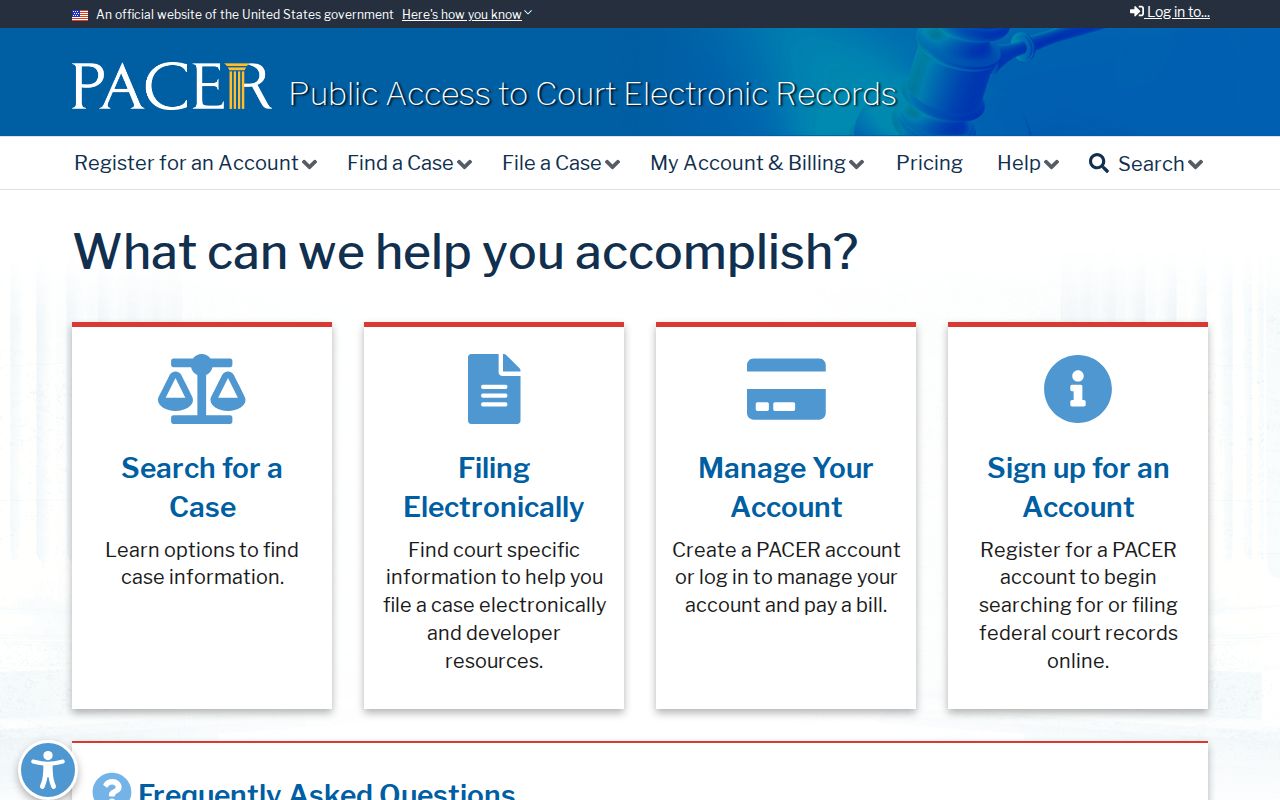
PACER is the official docket route. A local sheriff report or MiCOURT result should not be treated as a complete search for a federal prosecution.
Federal prisoners are located through the Federal Bureau of Prisons inmate locator, not through Michigan OTIS.
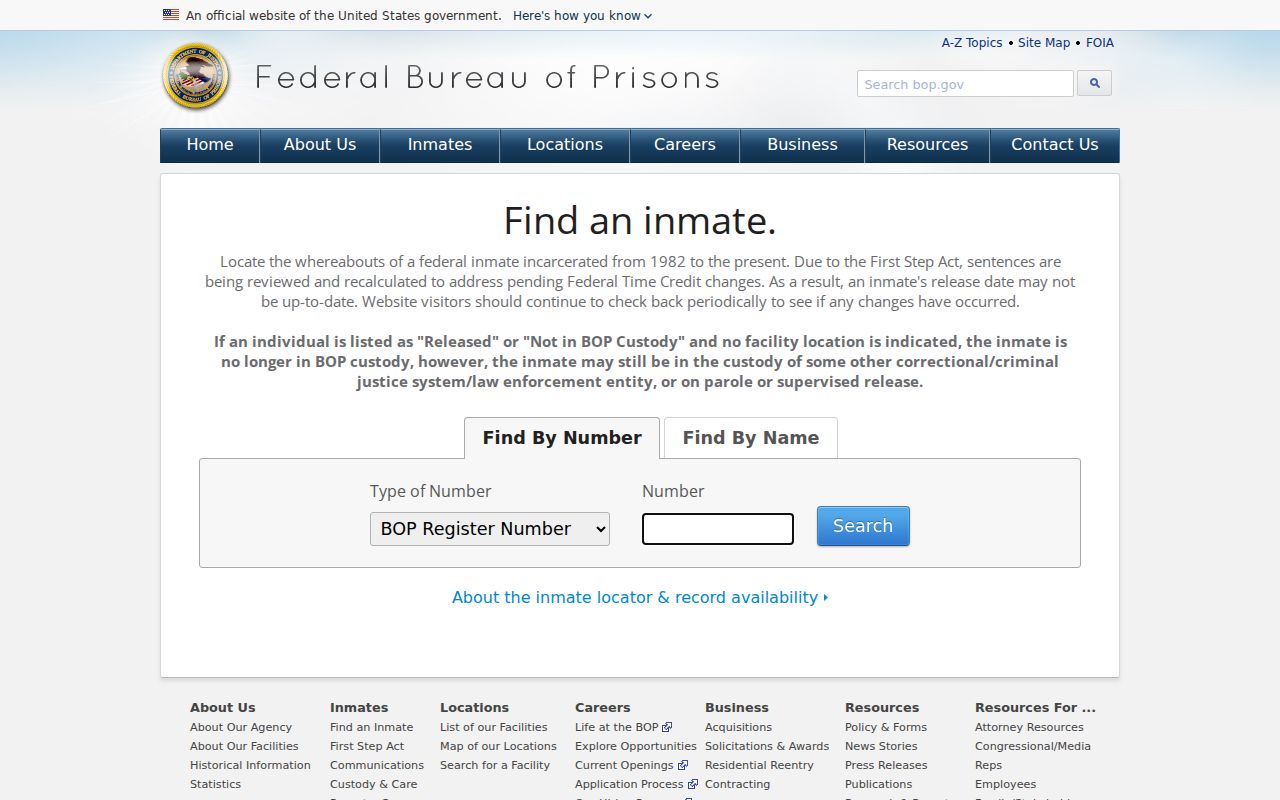
The BOP locator supports name and federal identifier searches. Someone reviewing their own FBI identity history can instead use the subject-only FBI electronic request route, which requires fingerprints and the published $18 fee.
Criminal Records by City in Oscoda County
Oscoda County has no incorporated city or village, so there are no qualifying city criminal-history pages, city police desks, or municipal courts. Mio is the county seat and a Census-designated place. Fairview and Luzerne are unincorporated communities. Residents in those places and every township use the same county and state channels: the Oscoda County Sheriff for local reports and custody, the 81st District and 23rd Circuit courts for case files, ICHAT for statewide public history, OTIS for MDOC supervision, and PSOR for registry searches.
This structure can prevent a common routing error. A Mio mailing address does not create a Mio police record or municipal-court file. The agency that handled the event remains the custodian, often the sheriff, MSP, or a DNR conservation officer.
Oscoda County Records Campus Changes
Three nearby addresses serve different roles in Mio. The sheriff and jail are at 301 S. Morenci Avenue. The Government Center is at 311 S. Morenci Avenue. District and Circuit Court Central Filing operate at 105 S. Court Street. The county reported that a January 2026 water-line break damaged the Government Center, moved offices to the south side, and closed the Sheriff Department and M-33/Morenci entrances until further notice. The official relocation notice shows why callers should verify access before travel.
The courts remained a distinct destination on Court Street. Court visitors should also expect security screening, no weapons, and phones turned off in the courtroom.
The campus has changed before. Oscoda County was organized in 1881, and its wood courthouse was built in 1888. Fire damaged that structure beyond repair in 2016. Temporary offices followed, and the replacement Government Center was completed in 2020. The county's official history collection preserves fire, plan, and rebuilding images.
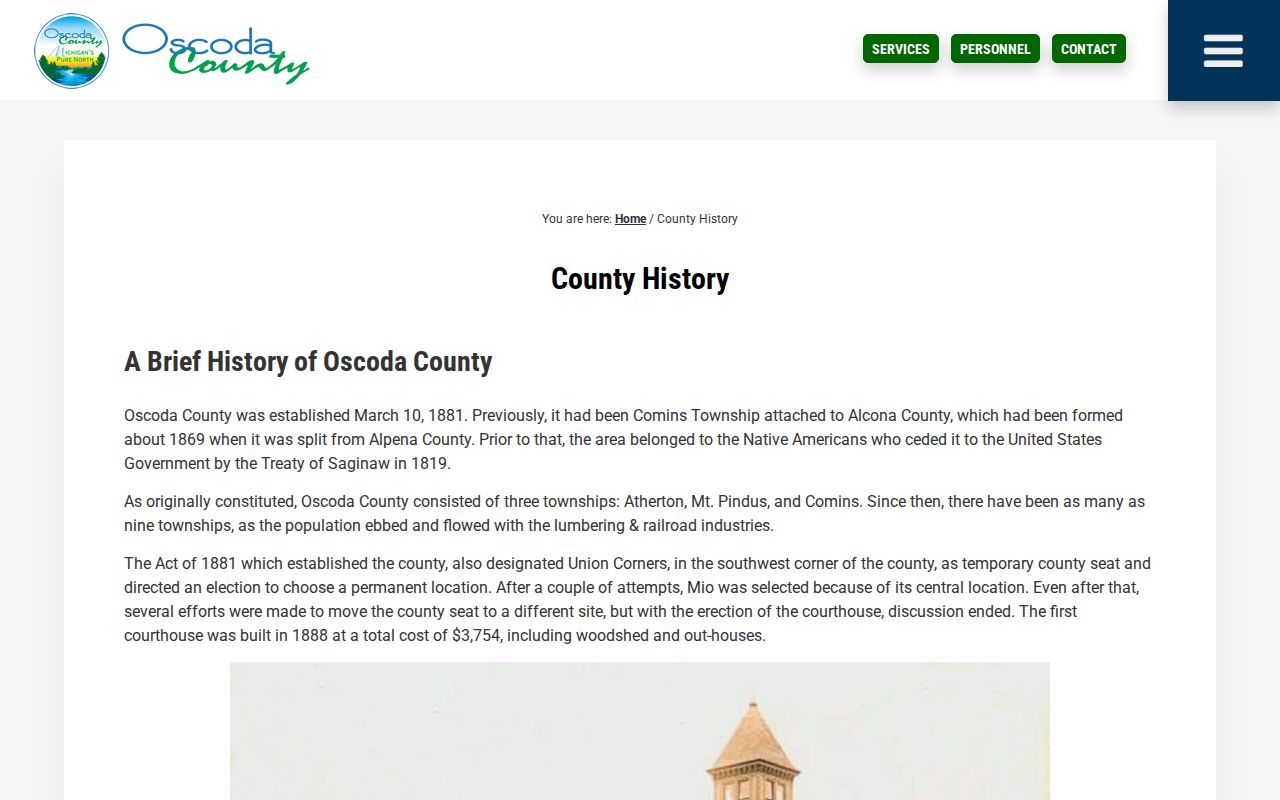
Those events explain why an older record may cite a former building while the present custodian works at one of the current Mio addresses.